Showing posts with label rates. Show all posts

Monday, March 24, 2025

A catfish perspective – understanding bottom feeders in the translation market


[catfish]

“The agency offered three cents a word! How shameful! Even worse, there are translators that will agree to it!” Almost every experienced and not a few not-so-experienced translators have expressed that anger and probably quite often. The existence of the rock-bottom market creates the hostile angry thoughts that high street stores have in reaction to a Walmart branch. This low-price niche seems an insult, if not a threat, to the profession. However, putting emotion side, there are solid, if not always justifiable, reasons, why certain agencies offer so little and certain translators are willing to take those offers. In practice, the “high street” translator can and should ignore this market as it does not actually pose an actual threat.

There is an economic basis for agencies offering low rates, whether it is type and location of their customers, their business location, their marketing limitations or their business strategy. Many agencies, especially small ones outside of the expensive European/US markets, work with customers that have low demands in terms of quality and even lower budgets in terms of their ability to pay for translation. A classic example is Russia, where traditionally business used Russian native speakers to translate into English and, in many cases, t at local rates. Furthermore, for agencies working in countries with low-costs, notably in many parts of India and China, agencies earn reasonable profit even if they do not add excessive profit in the price-to-customer. A far more common cause of such rates is the inability of an agency to negotiate higher rates. For example, in Israel, some agencies succeed in attaining much higher rates than others even if they work the same market. Finally, of growing importance, worldwide LSPs (Language Service Providers), such as RSW and TransPerfect, use volume to cover their expenses and make profits, with their revenue reaching very high levels. Of course, some agencies do offer low rates to translators but charge high rates to the customers, earning disproportionally high profits, but this is not always the case. Thus, many agencies often offer low rates for legitimate business reasons.

Many translators often accept these rates for legitimate business reasons as well as ignorance First, newcomers to the professions often treat these low-paying jobs as a practical way to gain experience. If translation is a second income, the amounts they earn, however low, may provide a significant boost to their income, especially in poorer countries. As a primary income, the cost of living varies significantly between country to country, meaning that these rates may be higher than other available income options where they live. Sadly, many translators have no margin for slow months and must take on any relevant job.  Of course, many translators taking on these jobs are unaware that they can attain higher rates through active marketing in their country or abroad. They erroneously believe that these low rates are the market. Still, one person's "shocking rates" is another's way out of poverty.

If, as in all markets, the low budget niche exists and may be expanding, experience translators need to stop wasting energy on decrying it and focus on the better-paying niches. First, low-cost translating has always existed to one extent or another with Google Translate, machine translation and AI expanding customer options. There is no point in complaining about the rain. That said, many specialist niches not only involve deep-pocketed payers but also require high quality translation. Such niches include the medical, legal and financial fields. Another strategy is to leverage AI in translation and/or administrative tasks to increase productivity, thus creating more opportunity for high income. Translators that are so interested have a wide choice of webinars and methods. In the long term, it is possible that AI will not be able to provide the quality required by many translation buyers, causing disappointment and leading these customers to return to reliable human translators, this time with a better understanding of the cost/quality payoff. Finally, as there is no translation market in the sense that translation buyers and providers lack convenient and complete access to all offers, translators have to seek out those customers that are willing to pay the rates they wish to receive even if they are higher than the budget ones too often seen in forums. Many customers still value quality and reliability. It is a matter of finding them. That is a far better use of one’s time and energy.

Catfish are a very successful species of bottom feeders. They may look ugly (unless you are fond of long fish whiskers) but not only do they thrive, they serve an important purpose in the biosystem. Likewise, inexpensive rates interest a wide community of translation buyers and providers. At the same time, numerous companies in many industries worldwide need and demand high quality translators and are willing to pay for it. It takes effort and knowledge to reach them but they are a better option for many experienced translators. As Voltaire would say, cultivate your garden.

Monday, February 26, 2024

When time does not equal money – expert services


[spine*]

There is this moment of complete shock. A computer technician comes in and solves a vexing problem in five minutes and then charges for a full hour. There is something unjust and absurd, even criminal, about the lack of proportionality between the time spent on the task and the amount you must pay. Yet, if carefully considered, professionals earn their rates if one considers that the years of education and experience it requires to efficiently solve a problem the first time. This assessment impacts not only our reaction when paying for services but, just as importantly, our conscience as professionals when demanding such rates. A qualified service provider not only should demand professional rates but do so with confidence.

It used to bother me that my accountant charged me so much money for preparing my simple tax return when I know that “all” he did was enter the numbers of the various factors into a computer program, press calculate, save the result and send me the bill. However, after considering how long it would take me identify those factors, find and understand a relevant computer application and enter the numbers, I realized that the accountant was saving significant toil and suffering, not to mention further explanations to the IRS. I was not paying for the hour or so of effort by the accountant but instead for the expertise and experience that allowed him to quickly complete the task. In one specific case, I did find the actual amount of the bill obscene and switch to less expensive accountant but I am happy with my choice to pay a professional for the service.

To turn the coin over, if you are a professional with several years’ experience, you probably have all the tools and knowledge required to complete most standard tasks in your field within a minimum time. In practice, the actual work required is far less relevant than how long it would take the customer or an untrained employee to complete the same task at the same level. If you are significantly more efficient or, even better, acting as the client’s “savior” in a given situation, your rate, even if it reflects work time far higher than actually invested, saves the customer meaningful time and effort. Thus, you can justify a respectable rate. So, ideally, service providers should consider the value of the service received by the customer.

As a legal translator, I provide many standard forms but charge by certificate, not time. To illustrate, many authorities require proof of address, generally a utility bill of some kind. With some 20 years’ experience and a large database, this task is not time-consuming but merely requires great attention to details, especially numbers. The customer is not paying for my actual time but instead for my knowledge and skill. As much of my work involves Hebrew texts, many of my customers could not do this themselves nor consider it worthwhile to keep an expert on the payroll. So, like the computer technician in the introduction, they pay for my expertise.

Thus, when considering whether the price of a professional is justified, consider the years it requires to reach that level of expertise and how much time/effort it takes an unskilled person to attain a similar result. Likewise, when setting professional rates, freelancers should also consider the value they are creating as perceived by the customer. Of course, the exact rate depends on the context and is far from exact. Still, the knowledge that a various task requires expertise attained over years should help provide some backbone to accepting and demanding proper professional rates.


* Picture captions help the blind fully access the Internet.

Picture credit

Wednesday, December 27, 2023

The peaks and valleys of translation quotes – what does it all mean for translation buyers?


                                                                [Mountain and foggy valley*]

Anybody that has ever asked for a quote for translation of documents probably was rather surprised by the price range. The highest proposal can easily be two times or more than the lowest one. The reasons for this high variance include both personal situations and market conditions. For the translation buyers, I present some ways to process and interpret the rates in order to identify the most appropriate translator.

Both individual considerations and market realities affect specific proposals. Since translators operate on the Internet, including email and professional sites, geography does not play a major role in limiting potential customers. Translators in Germany and India compete for the same buyers. However, the local standard of living creates a minimum level of effective income. In simple terms, translators have to know how many hours at a certain rate they have to work to pay the rent and buy groceries. In that sense, low and high are also relative terms in relation to the local standard of living. Of course, many freelance translators choose low rates as the consider it as a side-occupation, closer to a hobby than an occupation. On the other spectrum, other linguists need to make a living from their work and demand commensurate rates as they wish to live at a certain standard of living. On a more conscious level, many translators deliberately choose a strategy, including low- or high-end pricing. To explain, if income is defined volume multiplied by rate, some prefer to increase volume by opting for lower rates while others opt for rate by seeking deep-pocketed buyers. Experience level  often influences this choice. With experience, it is natural and healthy to demand higher rates while new translators are hesitant or nervous about demanding upmarket rates.

All these issues are overshadowed by a major market force in translation: nobody knows what the market rate is (see post). Freelancers and even some agencies rarely post translation rates. National laws may even prevent it as some countries consider rate discussion as price fixing. Even among colleagues, most translators considerate it “indelicate” to ask how much the other is charging. This fog leaves everybody in the dark. Even with years of experience, it is often unclear whether a given rate for a given job in a given year is high or low. Thus, aside from individual choices, translation quotes can vary greatly simply because nobody knows what the market rate is.

The issue is how should a translation buyer process the proposals and identify the most appropriate. The usual policy of automatically eliminating the highest and lowest is not relevant as the price does not necessarily reflect quality or base cost for the service provider.  It is important to keep in mind that agency quotes generally do not specify the actual cost of the translator. This rate, especially for the some of the larger agencies, can be rather low. The ideal buying process is to first identify the level of specialized knowledge required for the translation, the level of quality required for the actual use of the translated material and the budget. For example, if an attorney needs translation of a foreign court decision to submit to a local court, such a translation requires thorough understanding of the concepts, must be completely accurate in terms of content and should be stylistically appropriate for court use. Otherwise, the translation is defective or useless. By contrast, staying in the legal field, the translation of a series of legal documents for purposes of firm-level identification of issues requires far less expertise and polishing. The message must be clear. In the first case, it may be worthwhile choosing the high bid as the resulting translation will be “less expensive” than that produced a translator with less expertise. In the second case, even a translator with little experience at a commensurate price but sufficient knowledge may be able to provide a “good enough” result at a lower price. The key is to identify (as much as possible) the most appropriate translators for a specific job and then take the budget into account.

Like a statistician facing too much outlier data, translation buyers are sometimes confused by the lack of any industry standard rate range. The key to dealing with this variance is to focus on the solution, i.e., an appropriately knowledgeable translator as demonstrated by previous exposure to the genre, formal or informal, regardless of the level of experience, for the quality required of the job and then compare prices, obviously taking into account budget limits. It is important to remember that, in translation, to a certain degree, but only for a certain degree, you get what you pay for.


* Picture captions help the blind full access the Internet.

Picture credit

Thursday, May 25, 2023

For love or money – the chaos behind freelance pricing


[reeds*]

If human beings were rational creatures and actively motivated to seek their maximum financial benefit, the range of prices among freelancers, an unregulated and competitive world, would be relatively small, reflecting mainly differences in geography and personal situation. Instead, freelancer pricing for any given service, including translation, is marked by extreme differences far beyond those factors. Rates range from the sublime high to the ridiculous low. Clearly, price choice goes beyond mere rationality and involves, as Hannibal Lector from Silence of the Lambs would say, the question of what people seek. As I see it, freelancers aim to varying degrees to win the sales game, position themselves among their competitors or maximize their income or achieve any or all of these goals at different times. The interplay of these motivations ultimately shape the actual price choices.

First, there are people for whom attaining the best price is an earnest game. To clarify, it is not the actual amount of money or profit that matters but instead the perception that they “won” by getting the price they wanted. For these people, negotiating rates is an addictive and serious game that must be won. They sense the relative strength and weakness of the other party and strive to maximize their own benefit. By contrast, many freelancers are disinterested, even dismissive, of price negotiation, considering it irrelevant or even distasteful. Some would even provide their job for free for the sheer enjoyment. That a person is willing to pay for the service is merely a bonus. At either extreme, money tends to be of predominant or no importance.

Far more freelancers tend to take a comparative approach, placing themselves in a given niche in the market via their pricing. After an analysis of the market of some sort, such entrepreneurs define the price of the product and/or work hour in relation to others in the same field. However, some religiously monitor the market and adjust rates to maintain their position, like NFL quarterbacks comparing salary among each other, while others consciously or unconsciously forget the matter and let their relative rates and position change as inflation, competition and technology alter the landscape. While one group actively maintains its chosen price niche, the other one is not actually committed to the concept.

Some freelancers are far more calculating in their choices. They determine how much money they require to live their chosen lifestyle and tailor their pricing strategy to meet that goal. They constantly evaluate where to put their efforts to attain their income goals. Interestingly, there also those that merely want to pay their bills and live comfortably. Any income beyond that amount  is of relatively little interest. Whether such freelancers are foolish or modest is a matter of perspective.

In practice, over a long career, freelancers modify their pricing strategy as circumstances and awareness change. Family status, age and personal ambition have varying impact over the years. As a result, the approach to pricing also changes, meaning that freelancers may be motivated by any of these instincts to one degree or another at any time.  Still, a desire for victory, status or comfort seems a basic instinct that varies from person to person beyond logic. Pascal noted that humans were thinking reeds but we each bend to our own direction, including in pricing.


* Picture captions help the blind fully access the Internet

Picture credit

Sunday, September 4, 2022

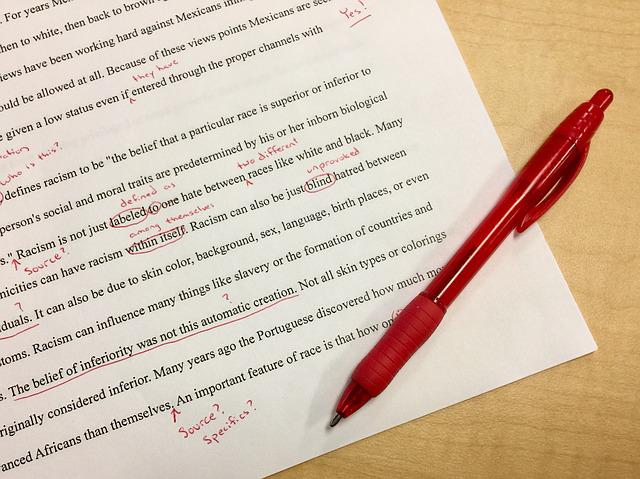
Cleaning costs – the uniqueness of editing


[text with editing marks*]

Certain tasks are standardized in terms of process and price. For example, an oil change essentially involves the same materials and time almost regardless of the actual car model and mileage. By contrasts, others, including house cleaning and language editing, involve unique situations in terms of initial situation, personal skill and purpose, rendering it impossible to state how long the task should take without knowing all facts. Thus, for such processes, the service provider, needs to carefully consider all factors before providing a quote while the service buyer should not expect a standard rate.

While I will be discussing specifically language editing, I will first compare it to a more common service, house cleaning. The issue of how long it should take to clean a flat of 100 m2 (1076 sq. f.) is actually quite complex. First of all, the first factor is the initial state of cleanliness and order. There is a marked difference between the condition of a flat that has been regularly cleaned as compared to one on which the contractors have just finished renovation. It can range from 2 hours to 1 full day even. I say that from experience. Likewise, cleaning workers vary considerable in their skills and speed. Speed and quality are often but not necessarily related, meaning slower work sometimes translates into more thorough results. Finally, the required time is often dependent on the desired result. Making the place livable, preparing for a visit from your mother-in-law and staging the house to put on sale require a significantly different level of finishing. The more polishing, literal and figurative, the more time is needed.

Editing, a form of cleaning if you look at it from a certain point of view, is similar. First, no two people write the same way, have the same knowledge or spend the same time of time and effort in preparing the text. On one extreme, quite rare, are skilled writers seeking a second pair of eyes to identify any remaining minor issues. In this case, the editor has very few mechanical issues to deal with and serves essentially as an important final QA check. On the other extreme are texts written by non-natives that may not know how to write properly in their own language let alone the language of the text. They are wise enough to recognize that the text is unacceptable and needs to be revised. In this case, the task of the editor is far more comprehensive, involving identifying grammatical and syntactical errors, rephrasing ideas and even sometimes reorganizing whole sections. This process involves multiple readings, ideally with each run-through focusing on specific issues. The time investment is significant in terms of the ratio between time and words.

Clearly personal approach affects the amount of time required for editing. Editors vary in the speed in which they process text, with some quickly identifying errors while others working slowly to fully analyze the text. There is some connection between thoroughness and speed, i.e., slower editors catch more issues on a given read-through than faster editors but additional directed readings can compensate for any shortcomings.  Likewise, editing requires concentration. While a few people can maintain full focus for long periods of times, most editors require various frequencies of breaks in order to maintain their focus. The longer the text, the greater the impact of these necessary breaks. To put it simply, it is essentially impossible to read 10,000 words in one reading session. Not all editors are created equal.

Finally, different text purposes involve different levels of polishing, radically affecting editing time. On the fast end of the scale, if a document is an internal document distributed to a limited number of persons, the language must be clear and accurate but it does not have to be particularly elegant. A document with a large and/or potentially wide audience, such as a published article may affect perception of the party ordering the editing and should reinforce a positive image. Finally, editing documents intended to persuade must go beyond correct language and effectively express the intended message, which sometimes involves transcreation, i.e., completely rewriting of the text, a creative and long process. Such documents include sales material and website text. Thus, the editor needs to know the purpose of the document in order to estimate the required level of polishing and time.

Curiously, industry standards range from 1000 to 2000 words per hour. However, as explained above, “standards” are not relevant for editing. In practice, each document is unique and quoted according to its base level, the required skill of the editor and the level of polishing needed. When editors do not take these factors into consideration, they often find themselves selling themselves short and unable to take on further work due to extended time on the current project or produce inferior work. Editing purchasers should appreciate a carefully produced price proposal, understanding that an editor that invests time to understand its texts and meeting its needs will probably produce a desired result. Since every text, every circumstance and every editor are unique, so will be the costs of editing. One size does not fit all.


* Pictures captions help the blind fully access the Internet.

Picture credit

Sunday, August 28, 2022

Translation entry: experience ≠ price


[blank yellow tag*]

The arguably most important and clearly most difficult question faced by newcomers to the translation business is how much to charge. There is so much uncertainty regarding the “ideal” price that many newbies simplify the matter to the equation “experience equals price”. I would argue that actually no real connection exists between experience and price nor should exist. However, there is a correlation between experience and work load, i.e., new translators require more time to produce a proper translation.

For better or worse, experience or a lack of it is often not reflected in the quality of the translation. Specifically, quite a few translators produce almost the same poor level of work in terms of accuracy and language throughout their long seemingly successful careers, apparently learning nothing over the years. By contrast, many new translators with the knowledge, drive and language required for a task produce excellent work. Since a customer seeks production of a project, not an employee, years of experience or lack thereof are simply not a relevant factor in setting a price. What counts is the ability to produce a proper translation. Therefore, there is no requirement to factor in a discount for being new to the profession when setting the price.

Many starting translators believe that the best way to jumpstart a career is to start with low prices and build up the clientele. This strategy works well with standard goods when quality is more or less uniform among suppliers. However, translation, as a service business, is far more dependent on the skill of the supplier rather than the raw material. Thus, translation purchasers, lacking other criteria, tend to link quality to price. In other words, a low price means a rougher translation. This perception means that beginning translators should set their prices towards the average, not low, segment of the market. Furthermore, new translators need to be aware how difficult it is to raise prices, with it often requiring years to persuade clients that the translator is worth the rise to normal rates. As they say in Hebrew, there is nothing more permanent than the temporary. Therefore, quoting average prices allows new translators to make a decent income from the start even if it may take a little longer to build up the clientele.

The most difficult question regarding pricing for a new translator is how much to ask or, if you will, how much is average. As there is no market price (see here), any average is at best an estimate for a specific market. In many countries, translators cannot lawfully openly discuss rates, making the whole matter even foggier. However, I would recommend privately asking translators in the market for which the quote is requested and taking into all factors, including whether the buyer is an agency or end client, the country of origin and the difficulty of the translation as well as the number of words, of course. Some open sources of specific rates are proz.com and agency sites, keeping in mind that the large LSPs tend to have a high profit margin and pay the translator very little, relatively. Pricing is an art, not a science, and requires some investigation work.

It should be noted that experience does increase efficiency. As in most professions, volume leads to greater efficiency up to a certain point. Experienced translators have seen certain text countless times and do not think how long to translate it. They handle many the technical issues, including document preparation and communication, much more effortlessly. They also know what type of errors they are prone to commit and actively look for them. As a result, veteran translators can properly finish a project faster, taking into account all elements of the process. For a new translator, it would be wise to insist on longer deadlines in order to allow for this inefficiency until the processes become automatic. Rushed jobs often lead to the long-term loss of customers. In other words, nobody loses a client because they need extra time but do lose one if the result is poor. Therefore, those lacking experience should factor this need for sufficient speed into their quotes by insisting on realistic deadlines.

Everybody starts at zero. It does not mean that new translators must or should discount their work because of their lack of experience as long as they can provide a proper translation. Experience may allow a person to work faster but not necessarily more skilfully. Of course, quality takes time, the more so for a beginning translator. Deadlines have nothing to do with pricing. In short, for those entering the translation business, charge a professional price but do not take on too much work at a time.


Picture captions help the blind fully access the Internet.

Picture credit

Sunday, November 14, 2021

The freelance dilemma – rising and raising prices


[Crossroads*]

It is probable that many countries will experience meaningful inflation in the short-term future.  For example, the US Labor Department announced an increase in prices of 0.9% in October of 2021, this previous month. For freelancers lacking both a CFO to analyze the risk as well as significant market strength, this inflation poses a serious challenge, even danger, as it affects our ability to make a living. As I see it, the self-employed have four options to cope with the return of inflation if it occurs, each with its benefits and risks.

To clarify why inflation is likely to become a significant factor in the short term, in simplistic terms, inflation is too much money seeking too few goods. In the last three years, governments around the world have pumped in unprecedented cash to their economies while their economies were not growing or even shrinking at the same time. Therefore, neither production nor productivity compensated for the inflow of money. Furthermore, given the current high cost of living in many countries and high level of government aid, many workers do not wish or cannot afford to return to their previous jobs, minimum wage and higher, creating a labor shortage in many industries and, consequently, pressure to increase wages. Adding the masses of people that have chosen to leave salaried positions to start their one business, employers will have to pay more to attract employees, a cost that will eventually be passed on to consumers. Thus, prices are likely to increase until a balance is reestablished.

Inaction is always an option. It is emotionally easier both for the self-employed and their customers to ignore inflation. Whether out of ignorance, the lack of belief that anything can be done, as with exchange rates, or the conviction that the market will not bear higher rates, passive freelancers hope that inflation will not be significant enough to affect their standard of living. In the worst case, the relative attractiveness of their rates will lead an increase in volume, compensating for the loss in purchase power. The advantage is that it is possible to continue with “business as usual” and ignore actual conditions. The risk is regular loss of potential income and lower actual revenue

One active response to wait for official inflation figures in order to justify rate increases to customers. In theory, freelancers can inform their customers that their rates are increasing X% to reflect the official figures for the previous six to twelve months. For the freelancer, such an approach helps reinforce the courage required to raise prices and should increase the chance that this request or notice is accepted without protest. On the other hand, this strategy recognizes a write off of indexing differences, the gap between the nominal and adjusted income. Furthermore, as freelance rates are not automatically linked to any income, there is a limit on the frequency that this unilateral increase can be made, generally around once a year. While this reaction-based approach may be simple, it also simply creates lost income due to its delayed effect even in the best circumstances.

Of course, the self-employed can take a proactive approach and inform their customers that as of a certain date, their rates are increasing. For example, a translator can announce that as of January 1,2022, their rates will be .105 EUR per word instead of .10 EUR per word to reflect increased prices and taxes. The advantage of the approach is that it reduces the impact of inflation. The danger is that not all customers will continue to provide work at the same level or at all. As a result, entrepreneurs must invest time and effort in finding customers that will pay their desired rates, a positive result in itself. Admittedly, there is no certainty that the proposed increase will fully compensate for the actual inflation but there is no certainty in business in any matter. While being proactive may create some tension with existing customers and involve increasing marketing efforts, it does provide some protection from inflation.

Another approach, at least for translators and editors, is to switch to project-based pricing. As there are no “units” in this form of proposal, the rate can be adjusted flexibly, taking into account specific circumstances such as the individual customer, the state of the relevant economy and translation markets and the actual supply and demand of the freelancer at the time. As there is no need to justify increases to the customer, they are much easier to attain in real time. Of course, it requires educating customers that you do not have any per-word or per-hour rates but, in my experience, they not only get used to it but find project proposals much simpler. While many customers, including large agencies, may not prefer this approach, end clients find it much easier to understand and budget for. Furthermore, it does allow for immediate adjustment of prices. Project-based pricing requires changing the nature of the customer-freelancer relationship but provides the most effective protection from inflation in my opinion.

If inflation does begin to significantly affect buying power, freelancers should actively consider their strategy to cope with it. Each approach suggested above has its advantages and risks. However, clearly the problem of rising prices and raising rates poses a dilemma to self-employed but the power to act is our hands.


* Captions help the blind access the Internet.

Picture: Image by <a href="https://pixabay.com/users/stevepb-282134/?utm_source=link-attribution&amp;utm_medium=referral&amp;utm_campaign=image&amp;utm_content=1580168">Steve Buissinne</a> from <a href="https://pixabay.com/?utm_source=link-attribution&amp;utm_medium=referral&amp;utm_campaign=image&amp;utm_content=1580168">Pixabay</a>

Sunday, September 19, 2021

The price is right – setting rates on certificate translations


[curtain*]

A significant part of my work volume is translating certificates of all kinds, from the simplest, college degrees, to the most complex, government tax forms. While it is quite common and accepted, if not ideal, to price documents by word count, this method does not reflect the actual work involved. Instead, it is advisable to price each certificate in a rational way using a base adjusted by its specific factors. It is also my experience is certificate translation is profitable both in the short and long term.

Certificates vary in the number of the number of words but more importantly in terms of formatting complexity, vocabulary and clarity. Clearly, some official documents are very short, such as drivers’ licenses, while others extend to many pages, such as bank statements. However, if time is money, formatting runs up the meter. A water bill of two pages can take 2-3 hours to recreate merely because of the formatting. To the best of my experience, automated PDF converters do not provide a professional result, leaving it up the translator to do the ant work, at least the first time. Furthermore, in some cases, the language used in the document is quite specific and must be, correspondingly, very accurate. Insurance and tax documents use terms whose translation require checking to ensure accuracy. This search takes time. Often, the quality of the PDF is poor, with no better copy available. Even worse, handwritten text can be quite difficult to decipher, requiring time and concentration, if not consultation. Thus, all certificates of the same number of words are not created equal.

I suggest setting a base rate for one page which reflects a set time and the economic reality. This base rate should represent what the translator wants to earn per hour, which of course depends on the cost of living and financial circumstances, among other factors. Translators also need to consider supply and demand. It is not difficult to ascertain the range of rates for the translation of a marriage or death certificate, rather standard documents. The rate should lie within this range, preferable towards the upper half. This number may vary depending on whether the ordering party is an agency or an end customer and the country of purchase. With this number, it is possible to assess the basic rate for each certificate.

At this point, the actual rate can be set by adjusting it upwards or downwards as required. Premium elements include rush jobs, difficult formatting, poor quality of the original, multiple pages and your expected level of distaste/boredom in doing the work. QA and accounting time should also be included. Discounting factors include short texts, simple language, customer budgets, quasi pro-bono situations, one-time discounts and established relations with customers. Furthermore, if there are more than one document of a similar type but with different numbers in the package, e.g., salary slips from several months, it is possible to reflect that repetition in lower rates for the additional documents. Note that having a template of the document from a previous translation is not relevant to the equation. When the plumber comes and fixes the problem in 10 minutes, he still charges for a full visit and correctly so as you pay for his experience.  As each document is treated individually, the sum total of the rates should reflect the total number of hours you expect to invest multiplied by your hourly rate. I often add a “surprise factor” to allow for unpleasant discoveries. The factor should not be so high as to distort the quote but enough to allow me not to get upset if the translation takes more time than I expected. The final amount is your quote, which, in the case of single documents, almost all customers find affordable.

I profit in the short term both emotionally and financially. When larger projects are lacking, it is reassuring to receive short translations to fill the time and create a feeling of working even if they will not pay any serious bills. More importantly, the actual per-hour rate for certificates can be amazingly high. In simple words, my profit is my expertise. The difference between the theoretical time required to translate the document from scratch and the actual time is often night and day, leading to healthy hourly rates with little stress. Of course, the first time I translate a new form can take a long time but this investment bears fruits in the future. Given the constant demand for certificate translation, I am generally quite busy with a good profit rate.

In the long term, certificate translation is the key for gaining the trust of customers and receiving more financially meaningful projects such as contracts and long documents. Viewing the translator-customer relation as potentially long term, it makes no difference if the first project only pays for today’s lunch or dinner. It is quite possible that in the near or far future the same customer will need a major translation. Having previously proven your quality and reliability, you have a significant advantage over potential competitors. In practice, trust is as important as rates, if not more. Furthermore, these small jobs often lead to referrals to other customers, creating a whole network of contacts, all from a small certificate translation. Thus, certificate translation is part of my long-term translation marketing strategy.

Certificate translation is a profitable niche on condition that the rates reflect actual reality. The price, seemingly insignificant, is right both in the short and long term, especially if you can use it to get to what is behind the window in the next round.


* Blind people need captions to fully access the Internet. Picture credit: Image by <a href="https://pixabay.com/users/mermyhh-48700/?utm_source=link-attribution&amp;utm_medium=referral&amp;utm_campaign=image&amp;utm_content=263731">Sabine Lange</a> from <a href="https://pixabay.com/?utm_source=link-attribution&amp;utm_medium=referral&amp;utm_campaign=image&amp;utm_content=263731">Pixabay</a>

Sunday, January 24, 2021

Much ado about nothing – Contemplations to calm the spirit upon seeing low rate offers


[Volkswagon Beetle*]

One of the dubious pleasures of being a service provider, freelance or otherwise, is the all too frequent awareness of colleagues that have no shame in offering very low rates, sometimes 25% of your rates, and undercut your business. In a business with no entry barriers, i.e., significant capital outlays or licensing requirements, any Joe and Jane can hang out a virtual shingle and offer the same service, as least as far as customers can tell. Since the fixed costs of a providing services are virtually zero especially for Internet-based businesses, the breakeven point for such providers is quite low. Thus, these market-breaking bids are legitimate offers.

However, for those professionals trying to make a living over the long term, these offers are both threatening and infuriating. First, the presence of low bids creates the impressions that your rates are unjustifiably high. This dissonance forces established providers either to lower rates or communicate their added value. On an emotional level, seeing a supposed colleague undercut your prices causes anger and frustration. These emotions are expressed in wishes, private or public, to have the guilty party hung at the gallows, exiled to Elba, spend time in a re-education camp in China or tongue-lashed by the principle, to name just a few options. However, the phenomenon of undercutting is as ancient as prostitution and just as indestructible. Thus, I offer some calming thoughts to help the suffering professional accept reality.

[Cup of coffee
The first point in mind that it is possible to earn a very good income with such rates on condition the cost of living is proportionally low. To provide a perspective, within the developed world, the price of a cup of coffee ranges from $0.74 in Lisbon to almost $3.50 in Tokyo. For those in living in the developing world, costs of living are even lower. Thus, with the same net income, one person can live like a king by local standards while someone in a more expensive country may be homeless. Therefore, the proposed low rate may be quite respectable for the provider.


[Typing on keyboard]
Even if a person lives in a posh place, it is possible to earn a decent living with low rates. The key is technological prowess. Since the value of services are essentially time-linked, people that work efficiently can produce more in an hour and thus earn a respectable daily wage. At an APTI conference in Spain several years ago, a translator gave a half-hour explanation of how to efficiently use the key board to expedite translation. The productivity of a person with such skills is clearly higher than the those not native to the technology. Thus, through effective use of time and technology, service providers can even thrive at low rates.


[Butter]
While the income from low-rate offers may seem low, it may be sufficient for the needs of certain providers. In many fields, including translation, providers have full time jobs in other fields and only provide the service to gain extra income. Peasant women used to call this butter money since it served to pay for treats and luxuries, however these were defined. Consequently, these service providers are not even trying to make a living, which gives them full freedom to set rates. The one-eyed consider themselves fortunate in the kingdom of the blind.


[Father teaching child]
For many, low offers are the tools to take the first steps in a new profession. Lacking experience and skills and needing to acquire them, they are willing to pay for their apprenticeship by cutting down on potential income until they are able to raise their rates. In any case, that approach only partially works. The reality is that raising rates is very difficult in almost all fields at any time. Furthermore, most customers demand the same level of work regardless of experience or lack thereof. However, starting out at low rates appears to be an effective strategy for entering a new profession. Most translators began in this manner.


[Child in fear]
Fear can be a factor. Some service providers may be aware that their prices are low but are very dependent on that scant income. The worry is that any attempt to raise rates will lead to the loss of the vital income or prevent them from attaining any new customers.  This previous year has clearly increased the number of freelancers in this category. This concern is real, difficult to overcome and worthy of sympathy.


[3 monkeys]
Finally, there are those that follow the advice of the three monkeys: they don’t look for, ask about or discuss rates. They are perfectly happy earning their daily bread (without the butter) and will not demand more. Some eventually attain wisdom and realize they have been working for peanuts for years, ultimately raising their rates. Others never grasp that they are cutting themselves short or simply do not care. Maybe ignorance is bliss.

The next time you find yourself muttering curse words after reading some offensive offer by a service provider in Facebook or a professional portal, take a deep breath and consider the possible justifications for the low rate. Clearly, anger only harms the person getting angry, especially when it can fuel no constructive action. Remember that Audi and Mercedes-Benz have been no less successful than Volkswagen and Seat. To quote Voltaire, in the face of price-lowering competition, il faut cultiver son jardin, i.e., create your own universe and not worry about others, at least as much as possible.


* The blind need captions to fully access the Internet. All picture from Pixabay.

Sunday, June 2, 2019

Translating instability


I have been a freelance translator for 15 years and have learned one thing about the business: it is dynamic. Specifically, the complex base through which translators ply their trade is in constant change, forcing us to try to understand and adjust to the best of our ability. These changes are reflected in four different areas, at least, that affect our livelihood for better or for worse.

Technology is a major cause of change. Computer-aided translation (CAT tools) utilities with their attendant term memories (TM) have been disputed and implemented for over a decade but have irrevocably changed the manner of translation and project management. Simply put, translator agencies in many cases expect translators to use these tools and accordingly produce more. While there are areas in which TM’s are much less practical, CAT tool use is now a norm.

More recently, neural translation (NT), a form of machine translation (not Google Translate), has shaken up the market. Without getting in the details of how it works, NT can produce understandable text from tens of thousands of pages at significantly less cost and time than human translation in certain cases. Depending on the area, the text may be far from Shakespeare but in many cases the reader will have no issue comprehending it. This automated translation is acquiring an ever-increasing market share and squeezing out certain translation sectors. On the other hand, it is creating a huge market for people to edit the NT output to make it readable. Given the fast pace of improvement of NT, it is hard to predict which niches will be available for translators in five years.

At the same time, the business structure of translation is rapidly changing due to agglomeration and public stock offering.  Once an industry based on small, local agencies, more and more large international business agencies are being created through purchases and mergers. To finance these moves, these large companies are going public, effectively transferring their ownership to the public. The impact of these two trends is to lower translation rates due to the reduction of competition and greater market knowledge of the large agencies on one hand and the need to produce profit to the shareholders on the other hand. To paraphrase Ralf Lemster, a leading German financial translator, we need to either master the technology to increase productivity or hone a specialty to attain high rates.  The middle ground is rapidly shrinking.

In the background of the transformations are local legal developments. For example, changes in patent law eliminated the need for translation of certain documents. By contrast, EU regulations have created a vast need for translation in previous small markets, such as Czech or Gaelic. Likewise, regional or national certification modifications ease or render difficult entry into these markets, affecting the rates. Various ISO and European standards have increased the need for proofreaders. The legal background is truly a wild card for a translator.

A slower but no less powerful force is the ebb and flow of a language itself. Translation into English is one of the few stable markets as few changes have occurred in the demand for documents in that language in the last decade. However, the use of some languages has increased due to economic development, such as Chinese and Korean, while others have declined, such as French. That said, regardless of how small the segment, the demand for transcreation, the localization of a source text into a seamless local version, is increasing and providing good rates for more creative translators of all minor languages.

To be clear, these changes are neither to the complete benefit or detriment of the translator. They both reduce and create opportunities. For example, while the market for translating contracts has definitely shrunk, the demand for editors and transcreators has increased exponentially. The challenge we face is to match our talents, both current and potential, to the opportunities at hand. This effort requires constant, active testing of the market to ascertain what the current situation is, not a simple task in the “fog of war” world of freelancing. “Plus ça change, plus ça reste la mÄ“me chose” does not apply here because the only true constant in business (and life) is change even if we are unaware of the scope of its forces.