Showing posts with label language. Show all posts

Monday, August 18, 2025

Exotic or alien – when does a foreign word remain a stranger


All speakers and writers choose their words. Linguists, including authors, editors and translators, may invest more time and energy in this choice but even the most basic user seeks the best term in terms of register, connotation and impact. Essentially, the chosen word must sound right, which is a matter of accustomed sound. Words with unusual phonetic signatures sound strange. However, in terms of word choice, as there are no “pure” nations in terms of racial background, there are no pure languages in terms of roots. An exchange of words occurs anytime one culture meets another. In some cases, the words become an integral part of the language and lose their foreignness. In other cases, people use these words despite their non-local origin because there is no substitute in the original language. However. in many cases, speakers of different generations and points of view may disagree whether a given verbal immigrant has any raison d’être as there exists a highly adequate term. The processs never ends.

Some foreign words have been a part of a language for so long that they have become native. For example, in Russian, the word for beach, пляж [plajh], comes from the French plage while the term for a train station вокзал [vokzal] is derived from the English Vauxhall, the name on the first locomotive in Russia (from St. Petersburg to the Tsar’s village). This use of Western terminology does not bother the most nationalistic Russian. Likewise, an insulated American has no problem calling a nice sidewalk eatery a café, as distinguished by its poorer cousin, the coffee shop. New York brokers, Jewish or not, often consult a maven, a word derived from Yiddish and Hebrew, if they need an expert opinion. In Israel, Jews whose family came from Tunisia or Ethiopia use the words קיוסק, kiosk, and צ'ופצ'יק [chupchik], a whatchamacallit, whose origins are in distant Russia, without batting an eyelash. These words have become a basic part of the language.

Other foreign words still sound like immigrants but the language needs them. For example, a party can be fancy or posh but the French chic adds another dimension to the description. For describing a corrupt military dictatorship, there is no better word in English than junta, Spanish in sound and origin, and so succinct. In France, the left-wing parties are now considering holding les primaires, a gem taken from the Anglo-Saxon tradition of primaries and a relatively recent development in French politics. Hebrew is an active borrower of English terms to describe concepts that its limited root system struggles to cope with. For example, business people use the word אֵפֶקְטִיבִי [effectivi] [effective] to emphasize one aspect of the Hebrew word יָעִיל [yail], which encompasses both effectiveness and efficiency. Many Israelis have become quite skilled in terms of their ability לנרמל [lenormel], to normalize, the current situation. Languages must keep up with the times. Sometimes, it is easier to copy than to invent a word.

Nevertheless, foreign adoption can go too far, at least in some people’s eyes. The average American or Brit, depending on socio-economic background, may find it pretentious if a person said a pied-á-terre for a vacation home or “what do you think of my new coif” instead “How’s the haircut?”. The average French may have seemed to accept “le weekend”” and “le shopping” but French intellectuals and writers are far from happy with such terms, especially when the French terms are perfectly sufficient. As for Hebrew, many Israelis cringe when chefs say “crispy” instead of פריך [parich}. Even worse, in the ears of many lovers of the Holy language is the adoption of לקחת חלק [lakahat helek], the literal translation of the English take part, instead of the solid Hebrew word להשתתף [lehishtatef]. Many people believe that speakers should be proud of their language (regardless if so many of its words are derived from foreign roots).

The use of foreign words is a matter of both ideology and usefulness. Clearly, no language academy can determine which foreign word will go native and which will always be a stranger. However, the introduction of foreign words is one of the basic tools for intrinsic language development and occurs quite naturally. The answer to the question whether using a foreign word is chic or a faux pas is subjective by definition, as all language users, including translators, know.

Monday, June 30, 2025

English impressions - real or TV reality?


I have no first-hand knowledge of England. My short jaunt to London during my tour of Europe some 45 years ago is irrelevant. On the other hand, I have watched BBC television for many years now, mainly programs featuring food, travel and house searches. To explain, watching the news in Israel can be quite stressful and generally produces an urgent need for escapism. From all these programs, I have created a certain picture of English life in terms of food, houses and language. However, I am uncertain to what degree this TV picture of life actually reflects reality.

The English attitude towards meals as shown on BBC programs seems a bit extreme. First, it seems that the UK hosts a cult of worship towards ham and bacon, with each person having a strong opinion on the best combination of ingredients, shape and cooking. The English, including Scots, seem to be rather particular about the breakfast meat and view it as a required element of any proper breakfast. The closest equivalent that I have ever observed is the Iraqi obsession with perfect rice and how to properly prepare it, with each grain having to be separate. By contrast, UK diners view vegetables as guests that are only present because of noblesse oblige. The only plant-based materials, aside from potatoes, that grace an English plate are a few green peas, some lonely lettuce leaves or a few controversial Brussels sprouts. A tomato and cucumber salad is exotic in the UK, apparently, not to mention any side dish made from eggplant or zucchini. The final idiosyncrasy, at least as compared to the Middle East, is the reluctance and discomfort of UK diners to eat with their hands and actually touch their food. Whether in the Middle East or  Ethiopia, grabbing a piece of bread and scooping some dip is an act of community bonding. Apparently, such sharing is considered barbaric farther north. It seems that English dining is a bit rigid in content and manner.

UK houses also seem to have certain characteristics. First of all, most residences in the UK shown on the BBC have narrow entranceways, barely wide enough for one person to stand, let alone allow two people to pass each other. They remind me of the Spanish kitchens typical of the vacation flats that the UK holidaygoers seem to fancy. Another desired feature of UK housing is this space called a “solarium”. First of all, it seems a bit absurd given how few days a year the English sun deigns to appear. In sunnier climates, such a room becomes a gigantic oven in short time and is useless. However, maybe I am missing something. Moreover, according to the programs I view, open wood beams in the ceiling are considered “character” and a positive feature. At a glance, I would consider them an ideal place for dust and spider webs. Most interestingly, on the real estate programs, many British house seekers insist on having a pub nearby.  It seems hard to believe the Brits and Scots actually seek these features.

Of course, UK language is different from that of the United States in terms of both words and style. I simply am unsure how much people actually speak like the characters on the BBC do. Americans would never say the words posh, high street and mate, using fancy, main street or name brand and friend or man, respectively. Even more striking is the English avoidance of direct speech. Regardless of the situation, it is apparently acceptable to begin a conversation with “nice weather”. Even more peculiar in my eyes is how far a BBC character will go in order to avoid saying that something is derogative. Such discretion is so unreal and actually may be unreal.

I have no idea how much any of these random impressions of life in the British Isles are true or representative. It is quite possible they do reflect the habits of some of the population just as the content of The Housewives of Atlanta or any similar program does carry a grain or two of truth. I imagine that I would need to spend some time there to better ascertain whether BBC programs reflect reality or pseudo-reality. In the meantime, I can only speculate and be amazed.

Monday, May 20, 2024

Fossilized footprints – modern words with ancient roots


[fossilized  human foostep in stone*]

Very few people strive to understand the basic elements of their life. For example, Only paleontologists seek and find fossils or even ancient footsteps on rocks that most of us merely treat as a static and firm foothold. Likewise, writers, translators and editors consider words as distinct units, each with its unique past and characteristics, beyond its role in the context of a sentence. Here are five examples of words in English still used today that have retained their historical roots.


[compass]
Orientate – This word means to find one’s way. The Swedes used it practically to describe navigating blindly at sea to arrive at a specific point. However, it actually comes from the Latin oriens, meaning “the rising sun”. In other words, you need to find your “east”, not your north as they would say in Hebrew. By the way, the French town of Lorient was named after a ship, "L'Orient' that was built to sail eastward to the French colonies in India. Go east, young man.


[bale of straw]
Threshold – This word today means “on the edge of”  as in the team is on the threshold of gaining respectability. Its origin is actually as it sounds, i.e., it is the barrier that held the thresh, generally known as straw, within the floor area of medieval houses. Tiles and other hard materials were for the rich. For many centuries, the poor had to be satisfied with straw. On the other hand, replacing the floor was much less expensive and faster than it is today.


[dripping faucet]
There will be the devil to pay – This expression sounds rather straightforward: if you break the rules, the punishment will be serious. Actually, it probably comes from the nautical tradition, where the devil was the bottom beam of a ship that had to be tarred, paid, from time to time to prevent leaking. It was hot and unpleasant work and reserved for those sailors that were not sufficiently cooperative. I was told that on modern ships, it is necessary to periodically paint the engine room, also a quite difficult environment. However, at least now those tasked for this job get extra pay.


[kitchen pipes]
Plumber - All of us have had to call a plumber, a person that actually knows how to attach those pipes under the sink. The interesting aspect of the name of the profession is the root plumb, which refers to lead, the metal. People forget that for centuries lead was the metal of choice for many household items, including pots and pans, because it was strong, light and easy to shape. Today, plastic, iron and ceramic are the standards because lead is actually a slow-working poison but hindsight is always wonderful. To paraphrase a well-known movie, lead and lace in the kitchen is not a healthy combination.

[coach with 4 horses]
Teamster – The International Brotherhood of Teamsters is a powerful union representing truckers and warehouse workers, among others, in the United States. The word team in the title does not refer to any sports organization but instead grouped beasts of burden, e.g. horses, oxen, donkeys and mules, that were used to pull heavy loads, with the driver of such arrangements referred to a teamster. It has been a few generations, at least in the Western world, since motor vehicles replaced these animals but the name stuck. The horsepower remains even without the horse.


Like an ancient footstep immortalized in hard stone, many words show their past as well as the past of the humans that created them to those that keep their eyes and mind open. The process is still continuing. It is possible in the future that people will pen their thoughts without knowing what a pen is. For linguists, these roots add to the pleasure of language.


* Picture captions help the blind full access the Internet.

Top Picture credit

Other picture credit

Monday, March 18, 2024

The long trek up – second language mastery


[mountain path to snowy peak*]

Many people are amazed by those that have learned a foreign language and even more so by those that can speak more than two or more. Yet, the term “learn” is subject to countless interpretations, ranging from being able to function as a tourist to writing scholarly articles in the foreign language. As a translator that makes a living by working with foreign languages and a person that has conducted my daily routine in my  non-mother tongue for most of my life, I can say that learning a foreign language is a journey with a goal that is essentially unattainable in terms of structure, vocabulary and culture. Nonetheless,  the path  to mastery of another tongue is a pleasure in itself and merely ultimately depends on effort, not on innate ability.

Every language has its unique way of phrasing ideas. For example, some languages, notably English, prefer direct active expressions while others, especially Russian, often use passive or indirect forms. Compare the English I feel like (doing nothing) as compared to the Russian мне хочется [mne hotyetcya], literally to me is wanted. Likewise, the use of delayed subject varies: compare It is raining in English to יורד גשם [yored geshem] in Hebrew, rain is falling, without the “it is”. These variances create native language interference with the foreign language. It may take years of practice and correction to stop the leakage, if ever. Thus, foreigners, even when they speak fluently, struggle to speak like the natives in terms of sentence structure.

Total word knowledge is essentially a mirage. No matter how long a person lives in the country and uses the language, there remains a large quantity of unknown terms. For example, despite some 35 years in Israel, I just learned that gamalim means “camel drivers” as compared to gmal-im, which means “camels”.  Another interesting pair in Hebrew is germanit with the accent on the third syllable means “German” as compared to “Germanic” when the second syllable is stressed. On a more general level, some languages prefer specific language while others tend to make the concrete abstract, notably French. Despite all of one's efforts, it is impossible to know and understand the entire lexicon of a second language.

Culture is a multilayered factor. In most countries of the world, there are many subcultures, each with their own list of preferred and disapproved expression. One interesting example is the use of the word cousin. In most countries, the terms refers to a blood relative. However, many Irish indirectly refer to the British as their cousins while Israeli Jews similarly refer to Israeli Moslems (on the basis of the Biblical story of Hagar and Sarah) simirly. Generational differences also affect language use. For example, Israelis over the age of 50 will easily understand quotes from the legendary comedy trio Hagashah Hahiver while younger ones may have no clue to what they mean. For English speaking audiences, imagine the difference in saying “happy feet” to those over 50 as compared those in their 20’s. Of course, religious references differ depending on the dominant faith in a given culture. As we can only exist in one four-dimensional position at a time (as far I know), it is impossible to master all cultural references.

It may seem that I am implying that learning a foreign language is a waste of time if we can never attain full mastery. On the contrary, being able to communicate in a different language not only opens gates of understanding to so many people, it also enriches the mind. In my experience, regardless of age, it is exciting to learn something new. As the language learning experience is never-ending, it provides a never-ending opportunity to discover the unknown. People always have more to learn.

Not only is this potential not limited by financial or physical capacity, it also does not require extraordinary intelligence. To learn a foreign language only requires effort and practice as well as the willingness to make a fool of yourself and learn from mistakes, just like a four-year old. Clearly, innate ability and intelligence make the task easier but they do not determine success. The worst language learners have become fluent when “forced” by circumstances to function in that language. More importantly, reaching the peak of perfection in a foreign language is ultimately irrelevant. It is important to remember that even native speakers never master all aspects of their mother language. In practice, the trek up that mountain of fluency is filled with amazing discoveries and funny stories. For many people, especially translators and interpreters, it is the intellectual journey of their lives.


* Picture captions help the blind fully access the Internet.

Picturecredit

Monday, April 3, 2023

Le pur and l’impur – the issue of linguistic borrowing


[crispy biscuit*]

On a conceptual basis, purity and heterogeneity seem on the opposite poles. On the one hand, we have the words pure, clean, unadulterated, unpolluted and genuine. Pure-bred animals are worth more while many countries and societies have sought or are seeking racial purity as a goal. On the other hand, mixing is linked with diluted, cheap, compromised or hybrid. Mutts and immigrant societies are somehow considered less attractive and more problematic. However, the reality is that purity is an ideal that may not even be that beneficial. Pure-bread animals tend have shorter lives and suffer from more genetic diseases than mixed breeds while xenophobic societies tend to be less dynamic and flexible in the long term as compared to immigrant societies. Insistence on purity for its own sake has a high price.

Regarding this matter, the national language is an essential part of a country’s patrimoine, national treasure. Yet, like all developing entities, it has a tendency to naturally borrow from other sources as its speakers adopt foreign words and phrases. It is interesting to observe how various countries react and cope with this osmosis of alien terms. Of course, the current great colonizer is English. Whether through commercial ties or cultural emissions, people hear and adopt English terms to their own language and create a manner of expression that often disturbs significant elements of a population However, in some cases, due to either the extreme need to add terminology or a tolerant attitude, speakers welcome the newcomers to the existing lexicon. As I see it, variety, however distasteful it is at first, is the spice of life.

English, the great invader, is itself a product of sometimes violent amalgamation. It began as a gradual hybrid of Gaelic and Germanic languages but had to accept a forced marriage with French due to the Norman invasion. The steady entry of foreign terms has never stopped, especially for foreign items, including ketchup from Chinese, kangaroo from Australian aborigines and jubilee from Hebrew, to name just a few examples. Being a true mutt, English not only accepts words from completely different languages in the same dictionary but people proudly use them in the same sentence, bragging what a rich vocabulary they have. The muttier, the better, it appears.

Alas, the French, especially its national government and its intellectuals, view the matter completely differently. One of the most important natural treasures of France is the French language. It is irrelevant that French began as a local poor man’s version of Latin or that for a long time, one third of the country spoke another language, langue d’oc. The country is fully mobilized to protect its language from the anglicisme virus. The Académie Française actively scours the language for any invaders, rejecting any English word threatening the existence of a French species. The government passed the Toubon Law in 1994 to ensure that governments and consumer notices use proper French in communicating their messages. Of course, leading intellectuals cringe at the growing use of English words, often with changed meanings. Yet, they, like most French, go away for le weekend and find it un challenge de faire face à la revolution digitale, même le email. In practice, the French use foreign words when they are useful or create a “cool” effect. Pardon my French but merde alors!

By contrast, Hebrew offers little resistance. It is a language with few roots, frozen for a couple of thousand years and in dire need of modern terminology. For much of its modern existence, Hebrew was not even the mother tongue of its speakers. By the time the official Hebrew language academy finishes its deliberation on the matter, the usage is a fait accompli.  As the song goes, let it snow. It has already absorbed countless foreign words in the past, including Arabic, (al’an, hello), Persian (kiosk), Turkish (tabu, land registration) and Russian (chupchik, figamajig). English is just the latest influence. The words are sometimes distorted in pronunciation e.g., the English bowling is pronounced boweling, or meaning, e.g., American ice cream and American questions are actually soft ice cream and multiple choice, respectively, but these are minor details. Most Israelis greet them as they receive guests in Hebrew, bruchim ha baim, welcome to our house.

Of course, each culture chooses its level of formal acceptance of foreign words, especially from English with its colonialist reputation. Yet, regardless of the official attitude, the true decision makers regarding the matters are the people actually using the language. I admit that I do cringe when I hear an Israeli chef say crispy instead of the Hebrew parich. Yet, fundamentally there is nothing sacrilege in having more than one word for the same idea, each with its own evolving connotations. Colette wrote “Le pur and l’impur” showing the complexity of morals. Language is also far from a black-and-white issue. In fact, sometimes a foreign adopted child has a certain je ne sais quoi, as they say in English.


* Picture captions allow the blind to full access the Internet.

Picture credit

Monday, December 26, 2022

Articulating “the” situation in English, French, Hebrew and Russian


[statue of St. Pierre - Rome*]

While all languages have nouns, verbs and adjectives, the shy article identifying whether the noun is general or specific, the and a for English speakers, is a fascinating demonstration of the variety of approaches to defining ideas and how they affect second language learning. To demonstrate, English, French, Hebrew and Russian all have different rules for specifying nouns, which can often indicate the native language of writers when they write in another language, English in this example.

As a base line for this post, English article rules, granted a potentially controversial approach, distinguish general and specific nouns, ignore gender and sometimes allow the article to be optional. As a rule, the word a (an) before a noun in the singular or no article at all for a noun in the plural indicate non-specificity: A teacher/Teachers can kick you out of class. By contrast, the word the before both singular and plural nouns indicates specific examples: the teachers [at our school] are on strike. To complicate matters, abstract nouns do not require articles: Charity is the backbone of religion, with both charity and religion singular and without an article. In contrast, English nouns do not have gender, allowing English to have single comprehensive articles, specifically the and a, with an being used for pronunciation reasons, i.e., before a vowel sound, not a vowel as many students think. See a human vs an hour and a unicorn vs an umbrella. Finally, in phrases, English allows the omission of articles after the first noun, e.g., I brought the bread, butter and jam, with it being understood that the word the also applies to butter and jam. Most native English speaker intuitively understand these rules but not necessarily all ESL students.

French has the same articles but the distinction is less clear,  adds gender and number considerations and requires that all nouns have articles. The direct equivalent of the English articles are un/une and le/la/les/l’. In practice, their use is different from English. First, while the difference between un gateau and le gateau is clear, note the sentence la charitė est la colonne vertébrale de la religion uses the definite article, i.e., la, as compared to non-use of articles in English for the same sentence. Since French nouns, similar to most European languages, have a gender, the form of the article is adjusted for masculine, feminine and even plural: le gateau, la pâtisserie and les desserts. The l’ is used before vowel sounds, including before silent h’s, e.g., la hollondaise and l’angoise. The most common mistake of English speakers in French is to fail add the article to all nouns in a list, e.g., J’ai apporté le pain, le beurre, et la confiture. The different approach to articles in abstract nouns and lists is often noticeable in learners.

Hebrew only has half the article package, sometimes buries it but often is more than generous with its use. Specifically, Hebrew has a particle for a specific noun, the letter hehה , which it attaches to the relevant noun, e.g., חתול [hatul], a cat as compared to החתול [hehatul], the cat. In other words, the absence of the letter heh means that the noun is non-specific. The ambiguity is when a prepositional particle such as ב [bə], in, or ל [lə], to, is also added because the prepositional particle may include the article. Without full vowel markings, בקופסה  [bekufsa] could mean in a box or in the box. Not only that, in compound nouns, Hebrew adds the article to the second noun only. For example, compare בית ספר  [beit safer], literally house of  a booka school, to בית הספר [beit hasafer], the school. By contrast, the definitive articles is added to all adjectives describing said noun. Compare חתול שחור [hatul shahor], a black cat, with החתול השחור [hehatul hashahor], the black cat. The result of this binary approach to the difference between definite and indefinite articles is that Israelis often make errors in applying them in English, particularly the word a.

As is typical in the Russian language, it went down a different route and simply has no articles, definite or indefinite. Instead, Russian indicates the specificity of the noun through noun case, word order or adding words. To quote Wikipedia: “The use of a direct object in the genitive instead of the accusative in negation signifies that the noun is indefinite, compare: Я не вижу книги [ya ne viju knigi]("I don't see a book" or "I don't see any books") and Я не вижу книгу [ya ne viju knigu] ("I don't see the book").” (Sorry for the quote but the writer did such a good job.). As for word order, again from Wikipedia: “compare В комнату вбежал мальчик [b’komnatu vebyejal malchik] ("Into the room rushed a boy") and Мальчик вбежал в комнату [malchik vebyejal b’komatyu]  ("The boy rushed into the room").” Finally, the addition of words such as какой-нибудь [kakoe nibud] or Любые [lubiye], which can be translated as any, makes it clear that no specific object is intended. The results of this syntactic approach is the most Russians have no clear idea of how to use the and a in English.

All roads to Rome, they say. So, as long as the text transmits the intention of the writer, everything is kosher. At the same time, it is fascinating to see how languages approach the subtle matter of definitive and non-definitive articles. Not only does it show the variety of approaches human languages take but, on a practical level, it sometimes allows the reader to identify the native language of the writer.


* Picture captions allows the blind to fully access the Internet.

Picture credit

Sunday, December 4, 2022

Alphabet soup – Simple lettering?


[pile of childen's plastic letters*'

When I tell people that I know Hebrew or Russian, quite often the first question they ask how difficult is it to learn the alphabet. My immediate answer is that new scripts are a matter of practice and quickly mastered. However, I read a recent post by Keith Geany on the subject of abugids, (I had never heard of the word either). To clarify, if letters represent sounds, then abugids are letters that intrinsically have both a consonant and vowel sound. For example, In Amharic, one of the languages of Ethiopia, there is a different letter for su, sa, etc. This discovery caused me to consider the multitude of types of connections between symbols and sounds and how the nature of this connection affects learning.

[Russian wooden dolls]

Slavic languages, especially Russian, have separate consonants and vowels, with the latter consistently expressing the assigned sound. Specifically, there are 10 vowels in Russian comprised of 5 pairs of hard and soft variations of the sound: a/ya, e/ye, ih/i, o/yo and u/yu. While learning how to write ten vowels may seem more complicated, this complexity is more than compensated by the fact that they always have the same sound, with the minor exception of unaccented “o”s, which are pronounced like an “a”. The word horosho (good) is thus pronounce harasho. In fact, this aspect of Russian is probably the only oasis of regularity in the sea of rules and exceptions that is typical of Russian.

[French books]


Other languages use the basic five vowels but combine them in numerous ways to allow for numerous ways to produce the same sound. For example, in French, the long a can be written a, ai, é, ais, ait, aient and er. While initially these combinations may be confusing, in practice their pronunciation is consistent. Thus, the learner merely has to learn how to pronounce the specific combination.

[basic English lesson  chalkboard]


By contrast, there is nothing predictable about the pronunciation of English vowels. For example, oo can be a short u as in foot or a long u as in look while an “a” can pronounced as a vague schwa as in the word “a” or a short a as in abnormal. There are so many exceptions that it sometimes seems impossible to provide a rule. So, while English may only have 5 true vowels, it takes significant exposure to the language to understand how to pronounce them.


[Hebrew text]


Some languages, notably Hebrew and Arabic, are partial abugids. Hebrew sometimes uses specific vowel letters to mark the sound, such as an aleph (א) for a short a or a vuv (ו) for a long o or u. However, specific additional marks, not letters, may signal the vowel sound that accompanies the given consonant. However, since most texts do not actually include those marks, the reader has to ascertain the sound by recognized the pattern into which the word falls. For example, the third person feminine form in the past tense in a certain verb group follows the pattern of two short a’s such that she thought is written  חשבה [h-sh-v] without any vowel indicators but pronounced hashva. Curiously, once the learner grasps the pattern, it is remarkably simple to pronounce Hebrew words.

[Amharic alphabet]


A few languages are complete abugids, with the largest families being Ethiopic and Indic. Every letter includes a consonant and vowel sound. Not having studies any such language, I imagine that it adds difficulty to mastering the alphabet but compensates by facilitating the pronunciation. Clearly, there are advantages for predictability and rules.

[Japanese script]


Going farther from Western alphabets, Chinese and Japanese have their own structures. Japanese combines Chinese symbols (kanji), which have no indication of pronunciation, with syllabic characters. Chinese has only kanji, which requires the learner to memorize the sound of each character. This sounds quite difficult for an adult learner.

[cat playing with flower]


Considering all these approaches and balancing learning and predictability, the alphabet of Slavic languages is not particularly challenging. In my personal experience, learning how to pronounce Hebrew was not particularly difficult as it follows a system even if I still don’t fully grasp its more intricate elements. On the other end of the spectrum, it is somehow ironic that probably the two most important languages in the world, English and Hebrew, are also the most difficult for a learner to master pronunciation. Regardless of the actual difficulty, I still believe that the alphabet is the least of the challenges in learning a language. In practice, the need to learn another alphabet should not discourage a person from a learning a language.


* Picture captions allow the blind to fully access the Internet.

Pictures via pixabay.

Sunday, September 4, 2022

Cleaning costs – the uniqueness of editing


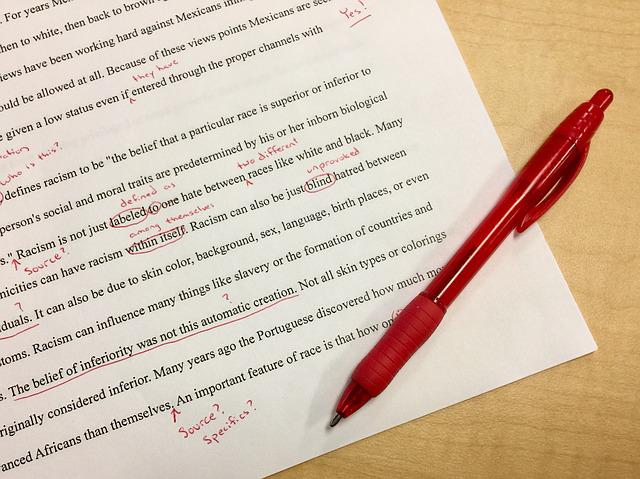
[text with editing marks*]

Certain tasks are standardized in terms of process and price. For example, an oil change essentially involves the same materials and time almost regardless of the actual car model and mileage. By contrasts, others, including house cleaning and language editing, involve unique situations in terms of initial situation, personal skill and purpose, rendering it impossible to state how long the task should take without knowing all facts. Thus, for such processes, the service provider, needs to carefully consider all factors before providing a quote while the service buyer should not expect a standard rate.

While I will be discussing specifically language editing, I will first compare it to a more common service, house cleaning. The issue of how long it should take to clean a flat of 100 m2 (1076 sq. f.) is actually quite complex. First of all, the first factor is the initial state of cleanliness and order. There is a marked difference between the condition of a flat that has been regularly cleaned as compared to one on which the contractors have just finished renovation. It can range from 2 hours to 1 full day even. I say that from experience. Likewise, cleaning workers vary considerable in their skills and speed. Speed and quality are often but not necessarily related, meaning slower work sometimes translates into more thorough results. Finally, the required time is often dependent on the desired result. Making the place livable, preparing for a visit from your mother-in-law and staging the house to put on sale require a significantly different level of finishing. The more polishing, literal and figurative, the more time is needed.

Editing, a form of cleaning if you look at it from a certain point of view, is similar. First, no two people write the same way, have the same knowledge or spend the same time of time and effort in preparing the text. On one extreme, quite rare, are skilled writers seeking a second pair of eyes to identify any remaining minor issues. In this case, the editor has very few mechanical issues to deal with and serves essentially as an important final QA check. On the other extreme are texts written by non-natives that may not know how to write properly in their own language let alone the language of the text. They are wise enough to recognize that the text is unacceptable and needs to be revised. In this case, the task of the editor is far more comprehensive, involving identifying grammatical and syntactical errors, rephrasing ideas and even sometimes reorganizing whole sections. This process involves multiple readings, ideally with each run-through focusing on specific issues. The time investment is significant in terms of the ratio between time and words.

Clearly personal approach affects the amount of time required for editing. Editors vary in the speed in which they process text, with some quickly identifying errors while others working slowly to fully analyze the text. There is some connection between thoroughness and speed, i.e., slower editors catch more issues on a given read-through than faster editors but additional directed readings can compensate for any shortcomings.  Likewise, editing requires concentration. While a few people can maintain full focus for long periods of times, most editors require various frequencies of breaks in order to maintain their focus. The longer the text, the greater the impact of these necessary breaks. To put it simply, it is essentially impossible to read 10,000 words in one reading session. Not all editors are created equal.

Finally, different text purposes involve different levels of polishing, radically affecting editing time. On the fast end of the scale, if a document is an internal document distributed to a limited number of persons, the language must be clear and accurate but it does not have to be particularly elegant. A document with a large and/or potentially wide audience, such as a published article may affect perception of the party ordering the editing and should reinforce a positive image. Finally, editing documents intended to persuade must go beyond correct language and effectively express the intended message, which sometimes involves transcreation, i.e., completely rewriting of the text, a creative and long process. Such documents include sales material and website text. Thus, the editor needs to know the purpose of the document in order to estimate the required level of polishing and time.

Curiously, industry standards range from 1000 to 2000 words per hour. However, as explained above, “standards” are not relevant for editing. In practice, each document is unique and quoted according to its base level, the required skill of the editor and the level of polishing needed. When editors do not take these factors into consideration, they often find themselves selling themselves short and unable to take on further work due to extended time on the current project or produce inferior work. Editing purchasers should appreciate a carefully produced price proposal, understanding that an editor that invests time to understand its texts and meeting its needs will probably produce a desired result. Since every text, every circumstance and every editor are unique, so will be the costs of editing. One size does not fit all.


* Pictures captions help the blind fully access the Internet.

Picture credit

Sunday, November 7, 2021

Keeping both feet on the ground – maintaining bilingual proficiency


[Footprints in sand*]

Professional translators must not only to be proficient in the languages they work in but also maintain that level over their career. Attaining proficiency generally involves some combination of intentional action, e.g., studies, and life circumstances, e.g., living in places where people used a language. By contrast, keeping both languages up to par requires conscientious effort as the geographically distant language receives less reinforcement. However, it is possible to overcome that disadvantage to a large degree through active exposure, oral and written. The benefit of such an effort is a long, successful career in translation.


[Rusty gears]
It is clear that an important difference between an aspiring and professional translator is language proficiency, especially in the language being translated. Attaining this level of knowledge of a foreign language generally involves formal study but more often than not also develops from intensive exposure that the language or culture, whether through frequent visits or long stays in a relevant country or living with people that speak that language. As adults, most translators live in the country of birth or an adopted country, reducing exposure to one of the languages. As rust settles forms on the geographically distant language, the person slowly loses the ear. More seriously, without exposure to current developments in vocabulary and structure, translators find themselves failing to understand the meaning of more modern language. The longer the exile, the greater that gap between the language being currently used and their knowledge. Over time, the “new” language becomes a truly foreign language. This dissonance is even true for native tongues. Long established expats can sound like characters from an old movie, slightly off in some ways. It is clear that, without reinforcement, translators can lose some relevant language skills over time.


[Social networks]
Of course, the best way to connect with a language is to use, speak and write with others in that language. With current technology, building an international network is matter of time, not money. For some, work situations create natural bridges when they require regular communication, such as in business or teaching. For others, it is matter of reaching out to friends and family and investing time in communicating. Curiously, communication limited to an expat community tends to reinforce localized language, which is not always identical to that of the home country as it includes 2nd language interference and foreign vocabulary. Of course, frequent visits are very productive linguistically. Even if a language is a native language, it still requires active use to maintain.


[Monitor]

In terms of convenience and being up-to-date, the various forms of media provide ideal passive reinforcement. Whether through television, radio or YouTube, to name a few, a person hears authentic language unaffected by local peculiarities This language is often the most updated, at least for a specific age group, because it intends to be communicative. It also requires little active effort beyond turning the TV or computer on, being available on countless Internet channels. By regularly watching such programs, translators can keep updated on changes in vocabulary and structure as well as maintain their ear.


[Newspapers]

However, since the oral media generally aim at the general public, reinforcing higher level language involves reading newspapers and books. Newspapers, especially those with a higher standard of writing, generally use more formal language than television, thus strengthening the internal feel of correct language. Books and professional journals firm the benchmarks for translating formal material in the relevant fields. A person must be interested and regularly invest time and effort to make a habit of reading more professional material but the reward is updated knowledge and enriched language. Regular active reading of well-written language is the most demanding of all the means but also the most productive form of reinforcement.

Personally, I practice all three to the different techniques. I not only regularly use English in all my oral and written communication as a translator, I also teach English at the local engineering college, which requires me to have thorough knowledge of English language structure. I also watch UK and French TV through an Internet site, providing almost daily exposure to current language. Furthermore, I have a subscription to the weekly magazine Le Canard Enchainé, which keeps up to date on events in France and reinforces my vocabulary. Alas, my Russian, despite the great number of Russians with whom I interact with, has not kept up with the times. As I tell my customers, my Russian is “Breznevian”, i.e., from the 1970’s. As a result, essentially, I translate certificates from Russian as bureaucratic Russian has not changed much in a hundred years. In these ways, I try to keep my languages up to date.

This commitment to maintaining and even improving knowledge of all applicable languages is a key to a long, successful career. Not only does it keep them up to standards, it also provides personal satisfaction. After all, the reasons a person chooses to learn foreign languages and become a translator generally includes a love of language, which does not fade with time. By keeping all their languages firmly rooted, translators can stand up proudly for their profession.


* Captions help the blind access the Internet.

All pictures through Pixabay.