Tuesday, January 17, 2023

Beautiful nothing


[picture of the Golan Heights from Ma'ale Gamla]

I just celebrated my birthday in a guest cabin (tzimmer in Hebrew) on the southern edge of the Golan Heights community of Ma’ale Gamla. The view from the porch overlooks a long barren slope leading down to the valley below with the fruit groves and water reservoirs and the eastern edge of the Sea of Galilee (Kinneret in Hebrew) to the left. In the far distance there are hints of Tzfat and other northern cities in Israel. Actually, due to the cloudiness and rain, everything was a bit grey and fuzzy. Aside from that, there is almost nothing there – no cars, no noise, no people and no tumult. In fact, the nearest restaurant is some 35 minutes by car. In short, aside from the fat garden cat (who has somehow avoided becoming lunch of the local wild dogs) and the resident birds, there was no action.

While for some this would be vacation from hell, for me, this is the place where merely being here makes me smile. I felt grounded there, at peace, undisturbed by the winds of real life. The nature is as unspoiled as you can get (and only 30 minutes from where I live). Bird song and cat meows filled any sound void. The quiet allowed my soul to relax. The pitterpattering of the rain on the roof was calming, reinforcing my determination not to anything forced. As for food, we brought our food, allowing us to eat whenever our stomachs so requested. As a couple, a few days away from the daily small annoyances of domestic life only reinforced why we are together. Work did not exist. As for what I did, the list is short: solved crossword puzzles, read le canard enchainé, stared at the Kinneret, slept, rested and ate too much chocolate; in short, I had a perfect weekend.

When I lived in Oregon, many moons ago, I knew factory workers who lived for their annual hunting trip, talking about it all year round and planning it in great detail. I now understand that type of thinking much better. These blessed moments of being where we want to be may be few and far between but they justify why we put up with the annoyances of work. I am lucky in that I have created a solid work balance and enjoy my routine. Still, balancing translation and teaching can sometimes be stressful in terms of time management and tasks. The knowledge that a few times a year I can do what gives me unadulterated pleasure makes life so much better.

There are those for whom heaven is an exciting day in a big city. For me, a quiet day in nature is much satisfying. Nothing can be so beautiful.

Tuesday, January 10, 2023

Entrepreneurial vision and uncertainty


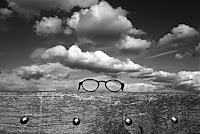
[eyes in glasses*]

It is said that business success requires vision. While essentially true, the statement is more complex than it appears because, as in intelligence, multiple types of vision exist. Since no single person is born with the perfect multifocal to have ideal sight in all matters, sole entrepreneurs are at a disadvantage as compared to companies or partnerships. Consequently, freelancers need to harness their special vision and take into account their blind spots.


[man with magnifying glass]


One type of practical vision is the ability to quickly and intuitively identify immediate solutions for short-term problems. People with this talent identify the essential elements and ignore distractors. Clearly, careful analysis can provide solutions but requires more time. To demonstrate, Israel television (sorry, I cannot remember which channel and which time) interviewed an engineering student at Ben Gurion University in the Negev in Beer Sheva with a special talent for solving problems. Disturbed by pigeons on his balcony, he created a raven robot with visual sensors and combined it with a small water pistol. Whenever, a pigeon landed on the balcony, it received a wet welcome. This is one of countless robotic solutions he had invented. None of them were technologically complicated but all were imaginative and out of the box. Thus, this vision involves intuitively creating effective solutions to defined problems.

[eye glasses in dark clouds]


While less positive in both point of view and appreciation, some individuals have the ability to foresee issues that will cause problems in the future. There was an episode in the program
The Twilight Zone in 1960 entitled The Purple Testament about a soldier that suddenly received the terrible ability to identify who would die in the next battle. In his case, this sixth sense was of no use even in preventing his own death but in business it is often quite important to identify and avoid negative and expensive issues in the future by applying simple means in the present. Most people find it difficult to distinguish exaggerated fears from reasonable assessments but a few truly know how to avoid minefields.


[boy with binonculars]


Finally, some people have the incredible ability to envision the future before others. In 1950, Ray Bradbury wrote the short story There will come soft rains in which the star is an automated house in which all functions are programmed, from cleaning the house to preparing food. The irony of the story is that its residents had been incinerated by a nuclear bomb and were no longer alive. More than 70 years later, this level of automation is not only practical but also already in existence. Inventors and startups depend on this ability to imagine a completely different future. Many claim to be prophets but only a few truly have the ability to see the future.


[cat with one eye]


Clearly, a special ability to focus on any of these three types of visions (or any other) involves a certain blindness in others, putting sole entrepreneurs at a disadvantage. Companies can hire as many talented personnel as their budget allows. Partnerships create synergy as in the musical partnership of Rogers and Hammerstein (Sound of Music and King and I, et al). Freelancers may have special talent in any single area but tend to be rather less skilled in others. For example, a person may be an excellent problem solver but lack any ability to even imagine what will be in five years. Thus, the lack of multifocal vision limits the potential of freelancers.


[Mr. Magoo cartoon image]


The partial solution is to recognize weaknesses, use outsiders, strive to improve and accept imperfection. The first step in solving in any problem is recognizing its existence. For example, there is no shame for a person to admit that long-term planning is not a forte. Once a person understands that there is an issue, two solutions, not exclusive to each other, are to enlist the assistance of another person either through outsourcing or community building, and work to improve the skills by reading, listening and studying experts. While maybe the skill not become  a strength, the freelancer will then be able to better decisions on those matters. Of course,  human beings always reserve the right of resignation, i.e., emotional acceptance of the inability and its consequences. If a person lacks the ability to foresee problems and is not willing to somehow overcome it for whatever reasons, the resulting waste of time, energy and money are acceptable prices, unavoidable if you will. While not ideal, this last option is the choice of many if not most people in the face of their incompetencies.


[see-no-evil kermit threesome]


Werner Heisenberg’s theory of uncertainty postulates that it is impossible to fully focus on position and speed at the same time, i.e., one certainty is at the expense of the other. Individuals may have perfect vision in one matter but often suffer from a certain degree of blindness in other matters. For companies and partnership, synergy is the solution. For freelancers, the solution is to strive to the best possible, get help if necessary and maybe accept one’s limitations. There is always a level of uncertainty in any business vision.


* Picture captions allow the blind to fully access the Internet.

All pictures via Pixabay except for the Mr. Magoo image

Monday, January 2, 2023

Time and remembrance – the time limit of freelance work and its significance


[3 sand hourglasses*]

The one element in life influencing all work environments is the fact that a day is only 24 hours long. For freelancers of all kinds, including translators, that limitation effectively caps the potential amount of work that can be accomplished in any given period of time without outsourcing. Moreover, understanding this framework allows freelancers to create a long-term work strategy, market more intelligently and cooperate productively with colleagues.

A sustainable work day, one that will not cause extreme exhaustion and/or burn out, ranges from 6-10 hours a day. The actual working time depends on the specific assignment, with some tasks requiring more concentration and energy than others, individual capacity, which involves age, lifestyle choices,  health, manner of brain functioning and motivation, as well as outside demands, notably children, running a household and possible holding another job. Actual productivity also varies for similar reasons. As a result, there is a finite and generally predictable limit to how much any single entrepreneur can accomplish on any given day.

Given this limit, it is advisable to plan carefully, seek the most profitable work and avoid being greedy. Far too many freelancers promise the moon in terms of deadlines. Some knowingly lie but many simply are overoptimistic. The fast way to lose business in the service industry is to miss deadlines. Disappointed customers rarely offer a second chance. It is better to try negotiate the deadline as, more often than not, deadlines are not as firm as indicated.  For example, Friday afternoon is actually Monday morning is most cases. As a result, freelancers need to properly estimate the time required to deliver a finished product both in terms of hours and days and allow a sufficient margin for unpleasant surprises. Given this timetable rigidity, it is generally better to seek and take on projects involving high productivity either due to specialization or experience, thus maximizing the quantity as well as the quality of the work. Quite often, short jobs, sometimes less than an hour, are quite profitable in terms of hourly income if they can be completed with sufficient efficiency. The worst strategy is to take on any project without realistically considering scheduling issues and end up overloading the day. The results tend to suffer from many errors often accompanied by late delivery, the express route to customer dissatisfaction. Therefore, effective freelancers consider their schedule carefully before taking on any project.

Given that a sole entrepreneur cannot handle a huge volume of project, marketing become more directed, straightforward and sometimes even less expensive. A sole individual generally cannot and should not take on a massive service contract from a large company, On the other hand, a given department or geographical area may requires certain services on an more infrequent basis, which may be relevant for the individual entrepreneur. An example is medical translation where material must appear in a host of languages, far beyond the capacity of any single translator. In this case, medical translators work the specialized language agencies that manage such projects. In short, freelancers need to direct their marketing to specific niches that create a balanced situation: attainable demands by the service buyer and sustained capacity by the provider. Since freelancers can narrowly focus their marketing, the actual expense often decreases as the goals become more realistic. It is far less demanding in both money and time to reach a focused audience than aim for a wide client profile. In this way, the work limitation makes it possibly to economically and efficiently market services.

Finally, since work capacity of a freelancer is by definition finite, there is enough work of all colleagues in a given niche to work. It is not a zero-sum word, i.e., my colleague receiving a project does not mean I will not receive work. This approach allows colleagues to cooperate and help each other in terms of knowledge, encouragement and work. A productive approach is that sharing knowledge and techniques is not helping the enemy but building a community. As it is impossible to be expert in all aspect of a business, it is very useful, even vital, to have expert sources. Because giving and receiving are closely linked, it is important to establish that community before the hour of need arrives. This community not only provides knowledge but meets the emotional need of understanding. Too many freelancers are alone, socially and/or professionally. Given that every business has its ups and downs, it is calming to have people to whom to complain that not only understand the situation but maybe can offer a positive vision. Colleagues may not be close friends but they often comprehend the entrepreneur situation better than life partners. Finally, since the nature of freelancing is too often feast and famine, it can be mutually benefit to pass on extra work to a colleague. Not only are clients grateful that they don’t have to locate another service provider, the colleague may be suffering a down period. Since no one is immune from such occurrences, we do get by with a little help from our friends. There is generally enough work for everybody, making it possible and profitable to cooperate with colleagues.

A sole freelancer is not a company. There is a limit to what can be done in any given day or week. It is vital to remember that since time is limited, schedule carefully, market wisely and share generously. A working day is finite in terms of time, a fact that should be remembered.


* Pictures helps the blind fully access the Internet.

Picture credit

Monday, December 26, 2022

Articulating “the” situation in English, French, Hebrew and Russian


[statue of St. Pierre - Rome*]

While all languages have nouns, verbs and adjectives, the shy article identifying whether the noun is general or specific, the and a for English speakers, is a fascinating demonstration of the variety of approaches to defining ideas and how they affect second language learning. To demonstrate, English, French, Hebrew and Russian all have different rules for specifying nouns, which can often indicate the native language of writers when they write in another language, English in this example.

As a base line for this post, English article rules, granted a potentially controversial approach, distinguish general and specific nouns, ignore gender and sometimes allow the article to be optional. As a rule, the word a (an) before a noun in the singular or no article at all for a noun in the plural indicate non-specificity: A teacher/Teachers can kick you out of class. By contrast, the word the before both singular and plural nouns indicates specific examples: the teachers [at our school] are on strike. To complicate matters, abstract nouns do not require articles: Charity is the backbone of religion, with both charity and religion singular and without an article. In contrast, English nouns do not have gender, allowing English to have single comprehensive articles, specifically the and a, with an being used for pronunciation reasons, i.e., before a vowel sound, not a vowel as many students think. See a human vs an hour and a unicorn vs an umbrella. Finally, in phrases, English allows the omission of articles after the first noun, e.g., I brought the bread, butter and jam, with it being understood that the word the also applies to butter and jam. Most native English speaker intuitively understand these rules but not necessarily all ESL students.

French has the same articles but the distinction is less clear,  adds gender and number considerations and requires that all nouns have articles. The direct equivalent of the English articles are un/une and le/la/les/l’. In practice, their use is different from English. First, while the difference between un gateau and le gateau is clear, note the sentence la charitė est la colonne vertébrale de la religion uses the definite article, i.e., la, as compared to non-use of articles in English for the same sentence. Since French nouns, similar to most European languages, have a gender, the form of the article is adjusted for masculine, feminine and even plural: le gateau, la pâtisserie and les desserts. The l’ is used before vowel sounds, including before silent h’s, e.g., la hollondaise and l’angoise. The most common mistake of English speakers in French is to fail add the article to all nouns in a list, e.g., J’ai apporté le pain, le beurre, et la confiture. The different approach to articles in abstract nouns and lists is often noticeable in learners.

Hebrew only has half the article package, sometimes buries it but often is more than generous with its use. Specifically, Hebrew has a particle for a specific noun, the letter hehה , which it attaches to the relevant noun, e.g., חתול [hatul], a cat as compared to החתול [hehatul], the cat. In other words, the absence of the letter heh means that the noun is non-specific. The ambiguity is when a prepositional particle such as ב [bə], in, or ל [lə], to, is also added because the prepositional particle may include the article. Without full vowel markings, בקופסה  [bekufsa] could mean in a box or in the box. Not only that, in compound nouns, Hebrew adds the article to the second noun only. For example, compare בית ספר  [beit safer], literally house of  a booka school, to בית הספר [beit hasafer], the school. By contrast, the definitive articles is added to all adjectives describing said noun. Compare חתול שחור [hatul shahor], a black cat, with החתול השחור [hehatul hashahor], the black cat. The result of this binary approach to the difference between definite and indefinite articles is that Israelis often make errors in applying them in English, particularly the word a.

As is typical in the Russian language, it went down a different route and simply has no articles, definite or indefinite. Instead, Russian indicates the specificity of the noun through noun case, word order or adding words. To quote Wikipedia: “The use of a direct object in the genitive instead of the accusative in negation signifies that the noun is indefinite, compare: Я не вижу книги [ya ne viju knigi]("I don't see a book" or "I don't see any books") and Я не вижу книгу [ya ne viju knigu] ("I don't see the book").” (Sorry for the quote but the writer did such a good job.). As for word order, again from Wikipedia: “compare В комнату вбежал мальчик [b’komnatu vebyejal malchik] ("Into the room rushed a boy") and Мальчик вбежал в комнату [malchik vebyejal b’komatyu]  ("The boy rushed into the room").” Finally, the addition of words such as какой-нибудь [kakoe nibud] or Любые [lubiye], which can be translated as any, makes it clear that no specific object is intended. The results of this syntactic approach is the most Russians have no clear idea of how to use the and a in English.

All roads to Rome, they say. So, as long as the text transmits the intention of the writer, everything is kosher. At the same time, it is fascinating to see how languages approach the subtle matter of definitive and non-definitive articles. Not only does it show the variety of approaches human languages take but, on a practical level, it sometimes allows the reader to identify the native language of the writer.


* Picture captions allows the blind to fully access the Internet.

Picture credit

Monday, December 19, 2022

Christmas in the Holy Land – Not what you imagine


[Santa at the beach*]

The Middle East has this sometimes-nasty tendency of rendering clear terms complex . Nothing is simple, even holidays. For example, in Europe and North America (Canada, Mexico AND the United States), South America and many countries in Asia, people and business are in the Christmas cycle of purchasing gifts and food for the holiday, finishing projects before the office closes and making final preparations for the seasonal trip or family visit. Outside, in the Canada, the United States and Northern Europe, it is quite cold, even snowing, adding to the seasonal feeling and complicating all driving. Those cheery pictures from Christmas movies have an element of reality.

Alas, in the birthplace of Christianity, the reality is rather different in terms of weather and holiday feeling. First of all, Israel is “enjoying” a rather balmy December, around 22C (in the 70’s in Fahrenheit, with nary a rain cloud, not to even mention snow flake, to be seen. It is true that December can be cold in some years but “cold” is far above zero here. As for Christmas, aside from in the Christian villages of Israel, a traveler in Israel could be forgiven for not realizing that Christmas is in a few days as there the TV channels are not broadcasting any ads urging you to purchase this or that annd Christmas music  is as common as Artie Shaw clarinet solos. Admittedly, the Russian retail chains do have various Christmas decorations on sale, including chocolate Santas, but that touch is far from omnipresent. On the other hand, Jews, Christians and Muslims all enjoy the star of Hannukah, the suvgoniot, fried jelly donuts, and enthusiastically discuss the price of commercial ones and the recipes of home ones. I personally feel that latkes, potato pancakes, are a more justified calorie intake but as they say in French, chacun son gout, to each his own. In short, Christmas in the Holy Land is quite different than elsewhere.

That said, Christmas in Israel is an opportunity for tourists. The warm weather allows comfortable touring throughout the country and even getting a tan on the beach. Try that in Germany or the UK. If you want to purchase anything, stores are open as usual. The tourist can get a few minutes of “Christmas” atmosphere by going to the German Colony in Haifa (recommended) or Abu Gush or Nazareth in the Galilee. This year Hannukah and Christmas are basically at the same time, allowing visitors to enjoy the Jewish candle countdown during the eight days of the festival of light. Children can experience Festivigal, an Israeli long-running children’s music show that runs during the holiday. For those scrooges seeking a non-holiday atmosphere, Israel is perfect, how ironic.

Businesses trying to function during the December dead day may find Israel is a source of relief. Except for Christians on December 24-25 and those going on vacation, all service providers are on a “business as usual” mode, meaning it is possible and even convenient to find any service you want. Sunday is even a standard working day in Israel, rendering the weekend much less catastrophic. You can say that one person’s holiday is another person’s opportunity.

For those with a historical, spiritual or religious bent, a trip to Israel can provide fascinating perspective on the past and present in terms of the complex relationship between ethnicity and faith. In the Middle East your tribe is your religion. While people enjoy cross-cultural friendships and some people are of mixed religions, when matters get tense, as does happen from time to time, you trust “one of our own”. It is possible to see this dynamic in any mixed village or city, including Jaffa (Yafo), Haifa and Rami. Faith in the Middle East is not merely matter of religion but also and possibly more importantly of personal identity. On the bright side, msot of the time Israel shows what happens when people respect each other’s faith and do not impose their own. All religions, including Christianity, are thriving. That message is relevant for the whole world. Thus, Israel provides a unique view of the world some 2000 years ago as even now at least in terms of social interaction.

So, a trip to Israel in December can be shocking, entertaining and/or educational, depending on the person’s expectations. The atmosphere of the holiday season in the Holy Land is certainly completely different that of Europe and North America. On a positive note, it is less kitschy and much warmer, temperature-wise at least. Those seeking professional services at a non-holiday rate during the last week of September should definitely consider a provider from this region. Finally, those seeking understanding of the origins of Christianity and tensions of the modern-day Middle East should definitely see it with their own eyes. Israel is not what you imagine. If you cannot make this year, have a happy holiday however you celebrate it.


* Picture captions help the blind fully benefit from the Internet.

Picture credit

Sunday, December 11, 2022

Making home work less work


[home office*]

According to the old Jewish joke, work is something you would get the maid to do for you if you could. Clearly working at home remains, to one degree or another, an obligation. That said, the task does not necessarily have to be utterly unpleasant. In fact, it is quite possible to render working from home a relatively pleasant experience without investing significant money by properly arranging the work space, taking breaks of all kinds and having a “real” life outside of work.

As home workers, especially freelancers, spend so many hours in their work space, it is vital to have a comfortable chair, install appropriate lighting and visually divide the work space from the rest of the house. A comfortable chair is a vital element in terms of physical comfort, affecting all elements of work over time, including fatigue and tension. Simply put, an ergonomic chair adds efficiency and effectiveness. Consequently, while sometimes rather pricey, purchasing an appropriate chair is a worthwhile, even necessary, business investment. Lighting has a more subtle long-term effect. Over a long day, appropriately strong and properly located fixtures can significantly reduce fatigue by limiting eye strain. Psychologically, the most important physical aspect of an office is that it is visually separate from the rest of the house. While for most translators “out of sight, out of mind” may not completely occur, a separate office, i.e., not in the kitchen, living room or bedroom, not only greatly increases concentration, it allows home workers to visually walk away from their work when they need a break or finish their day. It thus creates a clear distinction between work and other life, just as office workers experience. At the end of the day, one closes the office until the morning, without being reminded of tasks to be done by a pile of papers on the desk. In these ways, a home office remains an office for all purposes.

One of the great advantages of being a freelancer is the flexibility to pace work throughout the day based on personal and objective factors. First, everybody has a different concentration flow. These elements include warm up time, i.e., how long does it take after waking up in the morning before the person actually starts working; focus slope, how intensely and long can a person concentrate before becoming fatigued; and alertness times, i.e., morning as compared to evening people. In other words, people have unique patterns of ideal concentration. Between these peak times, it is necessary both physically and psychologically to take a break. Since there is no boss monitoring “productivity”, home workers can take breaks as often and as long as they want as well as choose their relief. These refreshment times range from 5 minutes to prepare coffee or tea (I highly recommend stocking up on quality coffee and tea but not abusing it) to 10-minute walks in the garden, 15-minute household tasks, such as hanging the laundry and doing the dishes, 30-minute exercise sessions and even 1-hour naps. As long as the required work is completed by the end of the day, it makes no fundamental difference what the actually time distribution is . These breaks not only allow homeworkers to accomplish more but also better work.

The key to powerful home work is antimatter, as they would say in Star Trek, specifically scheduling a few fixed, uncancellable times every week for pleasant activities. These activities can include lunch with friends, doing sport, volunteer activity or any other activity that feeds the body and soul. The key is to be with people we like. While this “lost time” may add some stress by reducing available work hours, it more than compensates by creating positive energy, which allows us not only to be productive but to enjoy our work. “All work, no play” is not sustainable in the long term.

Clearly, work is work and required for economic survival. Working at home may be a matter of choice or necessity. Nonetheless, it is both practical and worthwhile to create the ideal office, take breaks and avoid feeling like a slave to work. It is possible to minimize the “work” element of home work.

* Picture captions help the blind fully access the Internet.

Picture credit: pixabay

Sunday, December 4, 2022

Alphabet soup – Simple lettering?


[pile of childen's plastic letters*'

When I tell people that I know Hebrew or Russian, quite often the first question they ask how difficult is it to learn the alphabet. My immediate answer is that new scripts are a matter of practice and quickly mastered. However, I read a recent post by Keith Geany on the subject of abugids, (I had never heard of the word either). To clarify, if letters represent sounds, then abugids are letters that intrinsically have both a consonant and vowel sound. For example, In Amharic, one of the languages of Ethiopia, there is a different letter for su, sa, etc. This discovery caused me to consider the multitude of types of connections between symbols and sounds and how the nature of this connection affects learning.

[Russian wooden dolls]

Slavic languages, especially Russian, have separate consonants and vowels, with the latter consistently expressing the assigned sound. Specifically, there are 10 vowels in Russian comprised of 5 pairs of hard and soft variations of the sound: a/ya, e/ye, ih/i, o/yo and u/yu. While learning how to write ten vowels may seem more complicated, this complexity is more than compensated by the fact that they always have the same sound, with the minor exception of unaccented “o”s, which are pronounced like an “a”. The word horosho (good) is thus pronounce harasho. In fact, this aspect of Russian is probably the only oasis of regularity in the sea of rules and exceptions that is typical of Russian.

[French books]


Other languages use the basic five vowels but combine them in numerous ways to allow for numerous ways to produce the same sound. For example, in French, the long a can be written a, ai, é, ais, ait, aient and er. While initially these combinations may be confusing, in practice their pronunciation is consistent. Thus, the learner merely has to learn how to pronounce the specific combination.

[basic English lesson  chalkboard]


By contrast, there is nothing predictable about the pronunciation of English vowels. For example, oo can be a short u as in foot or a long u as in look while an “a” can pronounced as a vague schwa as in the word “a” or a short a as in abnormal. There are so many exceptions that it sometimes seems impossible to provide a rule. So, while English may only have 5 true vowels, it takes significant exposure to the language to understand how to pronounce them.


[Hebrew text]


Some languages, notably Hebrew and Arabic, are partial abugids. Hebrew sometimes uses specific vowel letters to mark the sound, such as an aleph (א) for a short a or a vuv (ו) for a long o or u. However, specific additional marks, not letters, may signal the vowel sound that accompanies the given consonant. However, since most texts do not actually include those marks, the reader has to ascertain the sound by recognized the pattern into which the word falls. For example, the third person feminine form in the past tense in a certain verb group follows the pattern of two short a’s such that she thought is written  חשבה [h-sh-v] without any vowel indicators but pronounced hashva. Curiously, once the learner grasps the pattern, it is remarkably simple to pronounce Hebrew words.

[Amharic alphabet]


A few languages are complete abugids, with the largest families being Ethiopic and Indic. Every letter includes a consonant and vowel sound. Not having studies any such language, I imagine that it adds difficulty to mastering the alphabet but compensates by facilitating the pronunciation. Clearly, there are advantages for predictability and rules.

[Japanese script]


Going farther from Western alphabets, Chinese and Japanese have their own structures. Japanese combines Chinese symbols (kanji), which have no indication of pronunciation, with syllabic characters. Chinese has only kanji, which requires the learner to memorize the sound of each character. This sounds quite difficult for an adult learner.

[cat playing with flower]


Considering all these approaches and balancing learning and predictability, the alphabet of Slavic languages is not particularly challenging. In my personal experience, learning how to pronounce Hebrew was not particularly difficult as it follows a system even if I still don’t fully grasp its more intricate elements. On the other end of the spectrum, it is somehow ironic that probably the two most important languages in the world, English and Hebrew, are also the most difficult for a learner to master pronunciation. Regardless of the actual difficulty, I still believe that the alphabet is the least of the challenges in learning a language. In practice, the need to learn another alphabet should not discourage a person from a learning a language.


* Picture captions allow the blind to fully access the Internet.

Pictures via pixabay.